

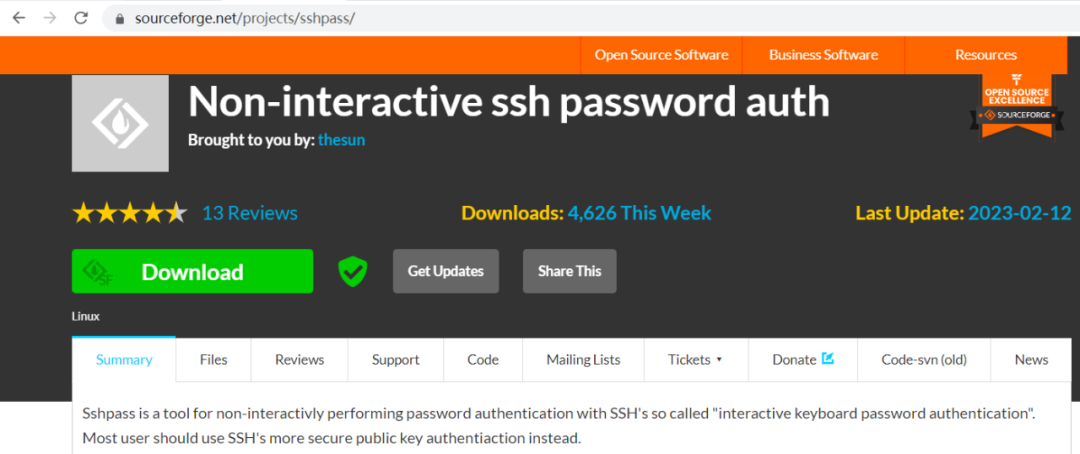
在灵活开源的Linux系统环境下,成功研发出一款高效自动SSH密码验证程序。该自动认证工具能显著提升大规模自动化脚本与批量作业的执行效率。此工具简易实用,只需进行基本设置,即可轻松简化远程登录操作。而其多种口令传输特性,更是能够实现无人值守运维,完全满足高度自动化脚本和大批量处理的需求。本文将详细解析这款工具的配置方法及其在自动化运维场景中的运用之道,助力大家提升工作效能,完善流程管理。
安装方法
部署Linux自动化SSH密钥认证工具需关注两个关键点:首选确定恰当的部署策略,当前主要有两种常用方式:运用预设的包管理器进行快速安装,或是依据源码自行编译定制化解决方案。譬如,基于Debian或Red Hat类操作系统的大多数设备都可借助区域性的包管理器轻松获取所需应用。以Ubuntu和Debian为例,可用apt-get命令迅速安装所需软件;在CentOS和RHEL环境下,则选用yum或dnf即可达成目的。若遇特殊需求且无法从现有包管理器获取所需工具,则需考虑自定义编译。在此情境下,首先必需依照需求安装必备编译基库,随后导入源代码启动编译流程,最终将生成并存放至/usr/local/bin路径的可执行程序自动安装。
1.远程登录服务器
sudo apt-get update
sudo apt-get install sshpass
sudo yum install sshpass
在实现远程服务器自动登录方面,我们可以运用“sshpass -p your_password ssh user@remote_host”来进行精确配置。在此环节中,"your_password"代表预先指定的登录口令;"user"标识待接入远程服务器账户;"remote_host"即为相应账户对应的服务器地址。
sudo dnf install sshpass
2.远程执行命令
在需要频繁执行高级服务器访问任务,例如下达大量命令,而又不想重复输入繁冗复杂的密码时,我们建议您采用自动化的SSH密码认证工具以提升操作流程的高效性。这种策略能有效地简化并加快远程控制指令的执行速度。具体步骤如下:首先运行"sshpass -p your_password",然后紧接着输入SSH用户名以及您要连接的远程主机地址,最后输入待执行的命令即可完成操作。
sudo apt-get install build-essential libssl-dev     # Debian/Ubuntu
sudo yum groupinstall "Development Tools"           # Red Hat/CentOS
3.文件传输
尽管常规操作通常需要涉及远程服务器之间的文件传输,然而,特制软件在Linux系统中却可以便捷地实现这一功能。例如,通过"sshpass -p your_password scp file user@remote_host:directory"指令,只需少量代码便可快速而高效地实现本地数据在异地的传输与接收。
https://jaist.dl.sourceforge.net/project/sshpass/sshpass/1.10/sshpass-1.10.tar.gz
tar zxf sshpass-1.10.tar.gz
cd sshpass-1.10
4.远程脚本执行
[root@192 sshpass-1.10]# ./configure
checking for a BSD-compatible install... /usr/bin/install -c
checking whether build environment is sane... yes
checking for a race-free mkdir -p... /usr/bin/mkdir -p
checking for gawk... gawk
checking whether make sets $(MAKE)... yes
checking whether make supports nested variables... yes
checking whether make supports the include directive... yes (GNU style)
checking for gcc... gcc
checking whether the C compiler works... yes
……
[root@192 sshpass-1.10]# make && make install
make  all-am
make[1]: 进入目录“/root/sshpass-1.10”
gcc -std=gnu11 -DHAVE_CONFIG_H -I.     -g -O2 -MT main.o -MD -MP -MF .deps/main.Tpo -c -o main.o main.c
mv -f .deps/main.Tpo .deps/main.Po
gcc -std=gnu11  -g -O2   -o sshpass main.o
make[1]: 离开目录“/root/sshpass-1.10”
make[1]: 进入目录“/root/sshpass-1.10”
 /usr/bin/mkdir -p '/usr/local/bin'
  /usr/bin/install -c sshpass '/usr/local/bin'
 /usr/bin/mkdir -p '/usr/local/share/man/man1'
 /usr/bin/install -c -m 644 sshpass.1 '/usr/local/share/man/man1'
make[1]: 离开目录“/root/sshpass-1.10”
[root@192 sshpass-1.10]#
利用自动化的SSH密码认证工具,可大大简化远端服务器脚本执行流程。简化后的操作只需包含sshpass命令以及相应的密码和用户名等信息,便可轻松完成远程服务器脚本的部署。
[root@192 sshpass-1.10]# cd /usr/local/bin
[root@192 bin]# ll
总用量 40
-rwxr-xr-x 1 root root 38416 4月   8 10:35 sshpass
[root@192 bin]# pwd
/usr/local/bin
[root@192 bin]# sshpass -V
sshpass 1.10
(C) 2006-2011 Lingnu Open Source Consulting Ltd.
(C) 2015-2016, 2021-2022 Shachar Shemesh
This program is free software, and can be distributed under the terms of the GPL
See the COPYING file for more information.

Using "assword" as the default password prompt indicator.
[root@192 bin]#
自动化运维应用
[root@192 ~]# which sshpass
/usr/local/bin/sshpass
[root@192 ~]#
在运维自动化领域,选配高效且可靠的SSH密码保护工具对于增强复杂脚本环境中的安全适应性和降低操作难度有举足轻重的影响。
1.通过环境变量传递密码
sshpass -p your_password ssh user@remote_host
利用环境变量作为安全密钥传输手段,兼顾了系统安全和使用便捷程度。透过"-e"服务功能,SSH 密码核对工作得以通过环境变量智能化实现,无需硬编码密码,增强脚本运行的灵活与稳定。
2.通过脚本参数传递密码
sshpass -p your_password ssh user@remote_host 'command_to_execute'
普遍的安全防范策略是通过执行一个定制脚本来完成SSH密码的校验。只需让用户启动此脚本,并手动输入密码即可,然后由相关工具来主导整个身份认证过程。
3.从文件中读取密码
将密钥置入仅具有专用权限的操作者可得的文件中,通过解码获取密码。这种策略既具灵活性又易行,且设定适当的公文权限可确保其安全性。
sshpass -p your_password scp local_file_path user@remote_host:/remote/file/path
4.结合使用不同方式
为满足特定需求及提高系统安全性,采取多样化储码策略是必要的,如通过配置文件设定变量,或借助环境变量、参数文件等多种方法完成代码传输。
sshpass -p your_password scp user@remote_host:/remote/file/path local_file_path
在保障保密性较高的密码安全方面,我们可设定合理的环境变量,利用精巧的参数文件以及其它恰当方式进行传输;此外,周期性的自动SSH密钥认证也是非常必要的手段。值得谨记的是,公然将明文密码纳入公共脚本和配置文件实属大忌,对保护这些备受关注的敏感内容来说,寻求更隐秘、扎实的解决方案显得尤为关键。
sshpass -p your_password ssh user@remote_host 'bash -s' < local_script.sh